What is an IoT Platform?
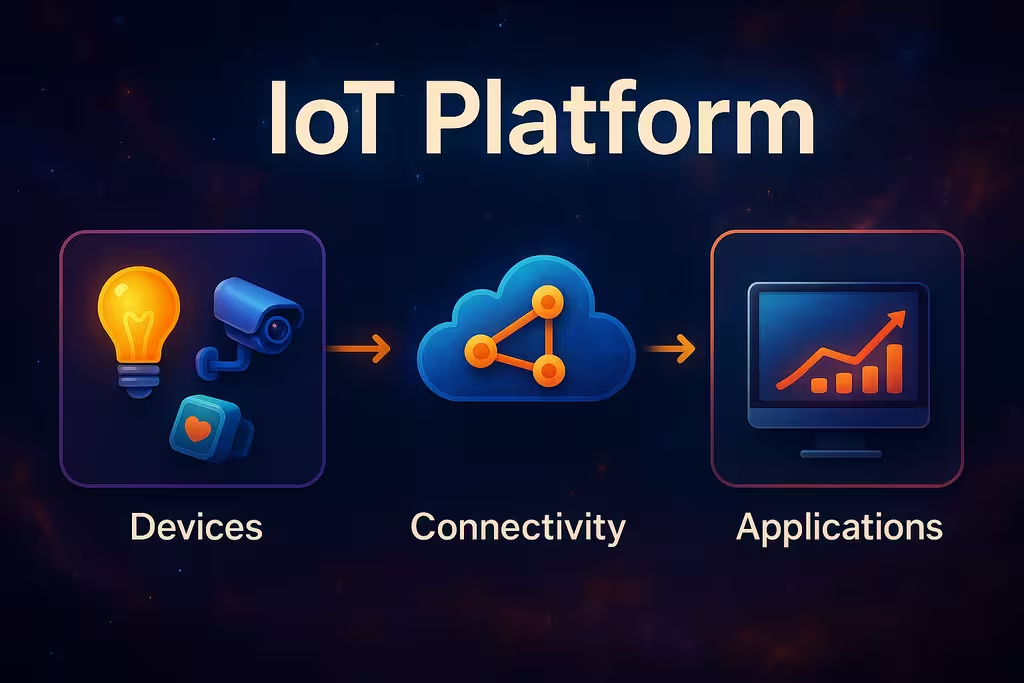
An IoT platform is a centralized service that connects, manages, and coordinates IoT devices by providing services for device provisioning, secure connectivity, messaging, data routing, storage, and analytics. It enables developers to build applications that monitor, visualize, and control connected devices and entire IoT systems.
Features of IoT Platforms
IoT platforms are complex systems that bundle together a wide array of capabilities needed to securely manage connected devices at scale. Whether you’re building a smart home system, managing an industrial fleet, or launching a consumer product, the platform you choose will play a central role in device connectivity, data processing, and user experience. Below is a breakdown of the core features that are commonly provided by modern IoT platforms.
| Feature | Description |
|---|---|
| Device Provisioning | The process of securely onboarding and registering devices onto the platform, including assigning credentials, configuring settings, and enabling lifecycle management. |
| Connectivity | Support for reliable and scalable communication between devices and the platform using protocols like MQTT, HTTP, or CoAP over various networks (Wi-Fi, cellular, etc.). |
| Messaging | Enables communication between devices and cloud services, often using pub/sub models or queues to handle telemetry, commands, and status updates. |
| Data Routing | Directs incoming device data to appropriate destinations such as storage systems, analytics engines, or external services, based on rules or filters. |
| Data Storage | Provides mechanisms to persistently store device data, logs, and metadata in databases or cloud storage for retrieval, analysis, and backup. |
| Analytics | Tools and services to process, visualize, and analyze device data in real time or historically, supporting insights, anomaly detection, and predictive maintenance. |
| App Support | Allows developers to build, deploy, and manage custom applications that interact with devices and data through APIs, SDKs, and UI frameworks. |
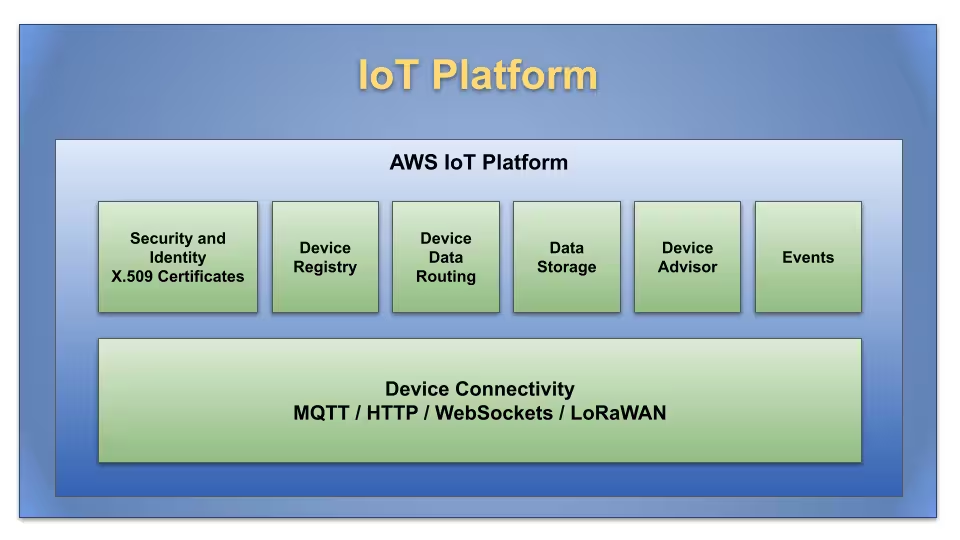
What are the Best Iot Platforms in 2025?
Here’s a comparison table showing the the key features across the best IoT platforms of 2025. This table includes the best two foundation platforms and the best two complete solution/end-to-end platforms.
| Feature | AWS IoT Core | Azure IoT | EmbedThis Ioto |
|---|---|---|---|
| Device Management | Yes | Yes | Yes |
| Secure Communication | TLS, X.509 certs | TLS, X.509 certs | TLS, X.509 certs |
| Data Ingestion & Routing | MQTT, HTTP, LoRaWAN, Rules Engine | MQTT, HTTP, AMQP | MQTT, HTTP, Webhooks, WebSockets |
| Rules & Automation Engine | Built-in Rules Engine | Logic Apps, Event Grid | Built-in Rules Engine |
| Analytics & Insights | AWS Analytics, Kinesis | Time Series Insights | Built-in Metrics & Analytics |
| AI Integration | SageMaker, AI inference | Cognitive Services | LLM & ML integration |
| Edge Computing | AWS IoT Greengrass | Azure IoT Edge | Ioto Device Agent |
| OTA Updates | Limited (DIY AWS Jobs) | Yes (IoT Hub Device Update) | Extensive policy-based management |
| Embedded Database | No | No | High-performance NoSQL embedded DB |
| Scalability | Highly scalable | Highly scalable | Lightweight to large fleets |
How Does an IoT Platform Work?
An IoT platform acts as a bridge between connected devices and cloud applications. It manages the lifecycle of each device, handles communication, processes data, and supports the creation of apps and services. Here’s how it typically works:
-
Device Connection
Devices connect to the platform via secure protocols such as MQTT, HTTP, or CoAP. The platform authenticates each device and establishes a persistent, secure communication channel. -
Provisioning & Onboarding
The platform assigns credentials, configures settings, and registers the device with metadata to identify it within the system. -
Messaging & Data Handling
Devices send telemetry data (like temperature, location, or battery status) to the platform. This data is routed in real time to databases, applications, or analytics engines. -
Rules and Automation
Rules engines or event-based workflows can automatically trigger alerts, actions, or device commands based on incoming data (e.g., turn off a device if temperature > 100°C). -
Data Storage & Analysis
Incoming data is stored securely and can be analyzed for trends, anomalies, or predictions. Historical and real-time dashboards provide visibility for developers and administrators. -
Application Integration
APIs and SDKs allow developers to build applications that interact with device data and controls, supporting user interfaces, fleet dashboards, and automation systems.
What Are the Benefits of Using an IoT Platform?
Using an IoT platform simplifies the development, deployment, and management of IoT systems. Key benefits include:
-
Faster Time to Market
Platforms provide pre-built services (e.g., provisioning, security, messaging) so teams can focus on their application logic rather than infrastructure. -
Scalability
IoT platforms are designed to handle thousands or millions of devices, with elastic cloud infrastructure and edge computing support. -
Security & Compliance
Built-in encryption, authentication, and access controls help protect data and ensure compliance with regulations like GDPR or HIPAA. -
Interoperability
Support for open standards and multiple protocols enables diverse device types and vendors to work within a single ecosystem. -
Data Insights & Automation
Real-time analytics, AI integration, and rules engines allow businesses to act quickly on device data to optimize performance or reduce costs. -
Remote Management & Updates
Platforms provide tools for remotely monitoring devices, pushing firmware updates (OTA), and troubleshooting, which reduces field service costs. -
Ecosystem Integration
IoT platforms integrate with cloud services, enterprise apps, and AI/ML tools, enabling end-to-end business automation and intelligence.
Where Does the EmbedThis Ioto Device Agent Fit?
EmbedThis Ioto is an IoT device agent that runs directly on your hardware to provide embedded device management. It includes a high-performance embedded web server, NoSQL database, secure communications, OTA updates, and built-in metrics and analytics — giving device builders a comprehensive on-device foundation without requiring custom firmware development from scratch.
Comments